

Our estate and the surrounding area has a rich and fascinating history. For thousands of years its most important feature was that it lies in the valley of the River Fleet. The last stretches of the rivers were diverted into sewers in the 19th century, but a few modern enthusiasts have been able to follow the river which still flows underground.
But you can still see a few signs of the river’s earlier glory. Hampstead Heath is full of little ponds and streams which all lead to the two sets of ponds and then into sewers. There are two main sources, one in the Vale of Health and the other in the grounds of Kenwood House. The latter is considered to be the official source, being furthest from the Thames.
Though academic opinions differ, the most popular view is that the two branches meet somewhere close to Camden Gardens, next to the railway bridge which crosses Kentish Town Road. In modern terms the river flows across to and under Sainsbury’s, along Lyme Street and on to the end of Pratt Street.
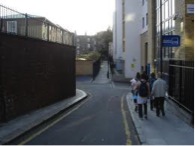
The Feet then goes downhill beside St Pancras Way. If you walk down to College Grove you can clearly see the dip in the ground which shows the old course, behind the Royal Veterinary College.
The river broadened out into what was called Pancras Wash, because it often flooded, in front of Old St Pancras Church. It then flows on to Kings Cross and Farringdon Street. The valley is very obvious at the bottom of Fleet Street. It comes out into the Thames at Blackfriars bridge, where you can see the entrance to the sewer from the river.
In the late 17th century a tusk was found – sadly it disappeared sometime within the next 100 years. At that time it was believed to have been from an elephant used by the Roman army. But it is now agreed that it was probably a mammoth tusk. So there were mammoths in Elm Village.