
William the Conqueror, 1066 Said to his captains
“I mean to affix
England to Normandy. Go out and borrow
Some bows and some arrows, we’re starting tomorrow”.
So William went conquering hither and thither
Till Angles and Saxons were all of a dither.
(from a poem for children popular in the 1930s)
In the section above about the Saxons you can read about the invasion of Britain by William the Conqueror and his detailed survey of the country, set down in the Domesday Book. This includes descriptions of the St Pancras area: “plenty of timber in the hedgerows, good pastures for cattle, a running brook, and two 20 pence rents”.
The four manors in the area have also been mentioned: Tottenhall, Cantelowes, St Pancras (around the church) and Rugmere. Two of these are of special interest to us.
Scholars differ (as they often do !), but one of the most knowledgeable about our local history is John Richardson. His history of our area (Kentish Town Past, Historical Publications Ltd, 1997, is detailed and fascinating. He believes that St Pancras Manor was situated “just south of Agar Grove, roughly where the canal cuts under the road, and where in the eighteenth century a mansion called Elm Lodge was built”. In other words, you are probably now sitting right in the middle of the Squire’s drawing room!
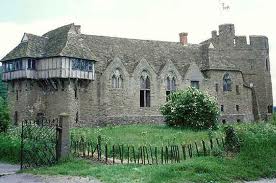
Mr Richardson’s conclusion about Cantelowes Manor is that it ended up as the first St Pancras Workhuse, and is shown in the picture given here. The photo gives some idea of what it may have looked like in its heyday. The fisherman is trying his luck in the River Fleet (see earlier article above) and “any remains are just south of the canal which skirts the car park of Reachview Court off Baynes Street.” In other words, across the canal from that stretch which acts as a shortcut to Royal College Street. This picture shows how the manor house may well have looked.
The owners of the manors were not only landowners and the major employers for the area; they also had the power to hold courts. Records for the Cantelowes Manor Court exist from 1480. The courts existed from the Middle Ages until the 20th Century, though their influence declined greatly after the 17th Century. They were only formally abolished in 1977, and a few were exempted from this legislation. If you wish to follow this further, try this linkwww.fylingcourtleet.org/penny.php.
There were two types of court. The court baron dealt with land ownership issues, and land management, as well as highway repairs, blocked up streams and dunghills ! (It seems that our ancestors would happily place them in antisocial places, such as on the street, or by the door, though they presumably did not spend their time, unlike Job (see picture) sitting in them [Book of Job 2:8 )
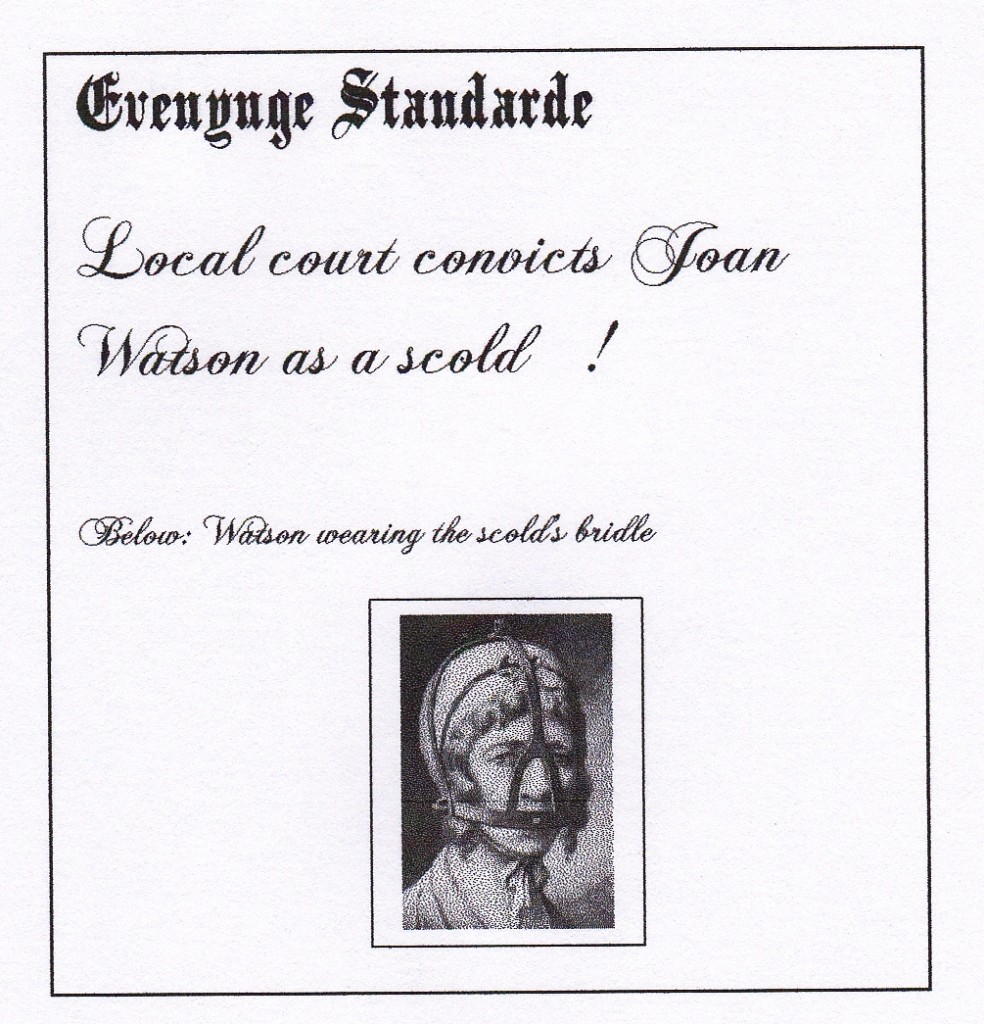
The court leet dealt with the appointment of officials and misdemenaours by tenants. The latter make interesting reading: “The wife of John Watson senior is a disturber and a scold” Though we have no records of serious punishment in the Cantelowes records, Mrs Watson could well have been obliged to wear the “scold’s bridle” pictured here, or could have been ducked in the Fleet, again as illustrated. Many more female miscreants were recorded “….the wife of Giles Eustace, Joan Kempe,Florence Bartram are brewers…. Meg Watson, Joan Wyse and Joan Pecher are common tipplers”.
Don’t think, though, that the courts were just another outlet for misogyny: “Rod Tailour has annoyed the common with his pigs…Mr Fishbourne entertained cripples and vagabonds in his barn – fined 20 shillings” (even though this appears to have been a booze up to celebrate the Restoration of King Charles II)…an assault between James Aschu and John a Barowe and Thomas Croche with club and dagger” But also “William Marshall keeps loose women of evil conversation and conduct:he is ordered to expel them from his house.”